

Call Vector Medical Billing
+1 (929) 539-7737
50States
Speech Therapy Billing Services
Medicare pays outpatient speech-language pathology under a therapy plan of care. Every line carries modifier GN, claims above $2,480 in 2026, a threshold shared with physical therapy, need the KX modifier, and services by SLP assistants are not covered. On January 1, 2027, CPT 92507 is deleted and replaced by ten timed codes, so treatment notes need minutes by disorder before the first 2027 claim.
98%Published NCR
24hClaim Submission
BAASigned with every client
AAPCCertified coders
AHIMACertified coders
E&OErrors and omissions insured
50 StatesRemote billing nationwide
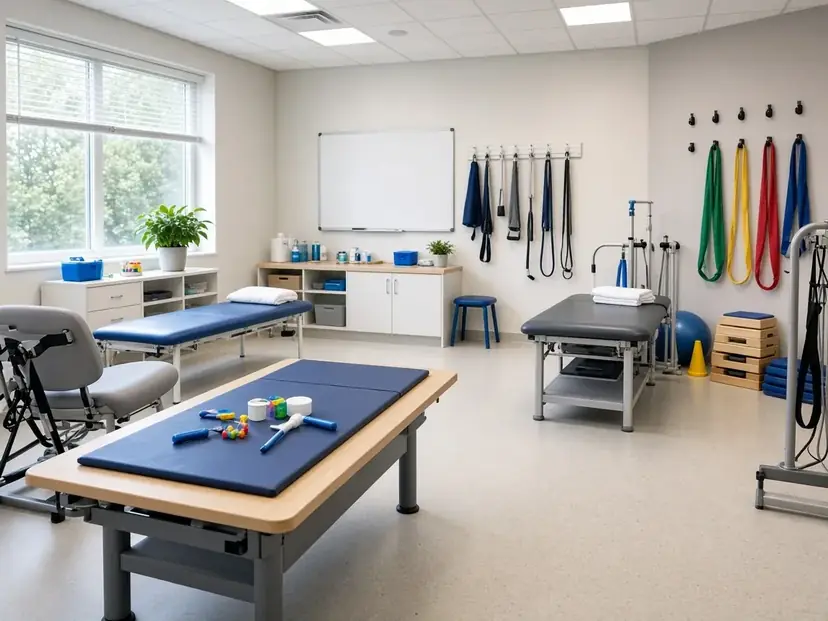
Outpatient SLP
What speech therapy billing includes
Evaluations, treatment, swallowing studies, and AAC devices, under the plan of care each payer expects.
Most SLP codes are untimed. 92507 for individual treatment, 92508 for group, 92526 for swallowing and feeding, and the evaluations 92521 to 92524 and 92610 bill one unit a day, however long the session. The cognitive codes 97129 and 97130 are timed in 15-minute units, and 96105 and 96125 bill per hour. CPT has no SLP re-evaluation code, so Medicare re-evaluations use the evaluation code.
SLPs in private practice have been able to enroll and bill Medicare directly since July 1, 2009. An enrolled SLP in a physician’s office is normally billed under the SLP’s own NPI; when the visit is billed incident to the physician, the supervising practitioner’s NPI goes on the claim. Medicaid and commercial plans add their own rules on orders, visit limits, and habilitative coverage.
What the speech therapy fee covers
- GN on every Medicare therapy line, and KX checked against the $2,480 threshold
- Plan of care certification and the 90-day recertification tracked
- Progress reports flagged every 10 treatment days
- Therapy notes mapped to the 2027 timed treatment codes
Speech therapy CPT codes in 2026
Untimed codes bill one unit a day. Medicare national non-facility amounts at the 2026 conversion factor of $33.40; Medicare pays in-person SLP services at the non-facility rate in every setting.
| Code | Service and unit | 2026 Medicare national |
|---|---|---|
| 92507 | Individual treatment of speech, language, voice, communication, or auditory processing; untimed | $76.15, through December 31, 2026 |
| 92508 | Same treatment, group of 2 or more; untimed | $24.05 |
| 92521 | Evaluation of speech fluency; untimed | $133.27 |
| 92522 | Evaluation of speech sound production; untimed | $111.89 |
| 92523 | Speech sound production with language comprehension and expression; untimed, never with 92522 | $226.46 |
| 92524 | Behavioral and qualitative analysis of voice and resonance; untimed | $109.22 |
| 92526 | Treatment of swallowing dysfunction or oral function for feeding; untimed | $84.17 |
| 92610 | Evaluation of oral and pharyngeal swallowing function; untimed | $84.84 |
| 92611 | Motion fluoroscopic swallowing evaluation; the radiologist bills 74230 | $91.52 |
| 92612 | Flexible endoscopic evaluation of swallowing (FEES) | $199.74 |
| 92607, +92608 | Speech-generating device evaluation, first hour and each additional 30 minutes | $122.58 and $47.76 |
| 92609 | Therapeutic services for a speech-generating device; untimed | $102.60 |
| 96105 | Assessment of aphasia, per hour | $97.20 |
| 96125 | Standardized cognitive performance testing, per hour | $102.87 |
| 97129, +97130 | Cognitive function intervention, initial and each additional 15 minutes | $22.38 and $21.04 |
Medicare does not pay separately for the non-speech-generating AAC codes 92605, 92618, and 92606, and bills aural rehabilitation as 92507. Amounts are national, before the geographic adjustment and the multiple procedure payment reduction.
92507 is replaced on January 1, 2027
Ten timed codes: a 30-minute base code and a 15-minute add-on for each type of disorder. 92508 stays as the untimed group code.
| Disorder treated | Initial 30 minutes | Each additional 15 minutes |
|---|---|---|
| Fluency | 92654 | +92655 |
| Speech sound production | 92656 | +92657 |
| Language comprehension and expression | 92658 | +92659 |
| Speech sound production and language together | 92660 | +92661 |
| Voice, upper airway dysfunction, or resonance | 92662 | +92663 |
Keep billing 92507 through December 31, 2026. ASHA’s guidance counts 16 to 37 minutes as one base unit and 8 to 22 minutes for each add-on after it, and 92660 and 92661 are not billed with the separate speech sound or language codes. CMS has proposed treating the new codes as always therapy, with GN and a plan of care; the 2027 physician fee schedule final rule had not been published in October 2026. Some Medicaid and commercial plans may keep accepting 92507 until they update their systems.
Medicare rules that decide whether an SLP claim pays
Most Medicare therapy denials come from the plan of care and the modifiers, not the code.
Plan of care certification
The physician or NPP certifies the initial plan, by signature or verbal order, within 30 days of the first treatment day, and the evaluation counts as day one. A verbal order is signed within 14 days. Since 2025, a written order or referral on file, plus proof the plan was sent within 30 days of the evaluation, replaces the signature on the initial plan, though not on recertifications.
Recertification and progress reports
A certification covers the plan or 90 calendar days, whichever is shorter, so recertification is due at least every 90 days. A progress report is written at least once every 10 treatment days, and the physician does not have to sign it.
KX at $2,480
In 2026, therapy above $2,480 a year for physical therapy and speech-language pathology combined needs the KX modifier, which attests the care is medically necessary and documented. Claims above it without KX are denied. Targeted medical review starts at $3,000.
No SLP assistants
Medicare does not cover services from speech-language pathology assistants, even where the state licenses them. There is no assistant modifier for SLP, unlike CQ and CO for physical and occupational therapy assistants.
Same-day edits
92507 and 92526 have no NCCI edit, but the second service takes a 50% practice expense reduction. One practitioner cannot bill 92507 or 92508 with 97129 on the same day. 92523 never bills with 92522, and 92526 never bills with electrical stimulation, G0283 or 97032.
Medical and treating diagnoses
Medicare expects the physician’s medical diagnosis and an impairment-based treating diagnosis, for example a stroke code from I69 with oropharyngeal dysphagia, R13.12. F80 developmental codes are used only when no medical condition explains the deficit.
Telehealth, Medicaid, and commercial plans
Each payer sets its own limits. These are the rules that change a speech therapy claim most often.
Medicare telehealth through 2027
SLPs can bill Medicare telehealth through December 31, 2027, with the patient anywhere in the US, including at home. 92507, 92508, 92521 to 92524, 92526, 92610, and 97129 are on the 2026 telehealth list; FEES, 92611, and the non-speech-generating AAC codes are not. ASHA advises the in-person place of service with modifier 95, because POS 02 pays the facility rate. From January 1, 2028, SLPs can no longer bill Medicare telehealth unless Congress extends it.
Children on Medicaid
Under EPSDT, Medicaid covers medically necessary speech therapy for children under 21, even where the state plan does not cover it for adults. Hard visit caps are not allowed for children; a state can set soft limits with prior authorization above them.
New York Medicaid
New York removed its 20-visit speech therapy limit on January 1, 2021, and fee-for-service Medicaid ended prior authorization for therapy visits on July 1, 2024. Services need a written order from a physician, PA, or NP, or a written SLP referral. Claims carry GN, plus ST for a patient with a traumatic brain injury. Early Intervention claims go through the state fiscal agent within 90 days of the service.
Habilitative coverage
Plans that cover essential health benefits must include habilitative speech therapy, for example for a child who is not talking at the expected age, and cannot set habilitative limits less favorable than rehabilitative ones. Many commercial plans still set an annual visit limit, so visits are tracked per plan year.
Not inside the monthly fee
The monthly cycle bills claims that are already in the system. These are scoped on their own.
Written rate
The fee is a percentage of net collections (flat or per claim in New York). No setup fee on the monthly cycle. Month to month. The written rate follows volume, payer mix, and how much of the cycle you hand over.
See pricing or request a written rate after the free audit.
Separate work
Credentialing with Medicare and each plan, Early Intervention provider enrollment, and audits of past therapy claims are scoped on their own.
Check your speech therapy claims before 2027
Send a month of SLP claims with plan of care dates, treatment minutes, and the remittances. We report missing GN or KX modifiers, late certifications, same-day edit denials, how your notes map to the 2027 timed codes, and a written rate.

Written
Monthly rate
98%
Published NCR
50
US States
BAA
Every Client
Speech therapy billing questions
Straight answers on Medicare, Medicaid, and commercial SLP claims.
What replaces CPT 92507 in 2027?
Ten timed codes take effect on January 1, 2027: 92654 and +92655 for fluency, 92656 and +92657 for speech sound production, 92658 and +92659 for language, 92660 and +92661 for speech sound and language together, and 92662 and +92663 for voice, upper airway, or resonance. Each pair is a 30-minute base code and a 15-minute add-on. 92507 stays billable through December 31, 2026.
What is the 2026 KX threshold for speech therapy?
$2,480, shared between physical therapy and speech-language pathology. Medicare claims above it need the KX modifier, which attests the services are medically necessary and documented. Targeted medical review applies above $3,000.
Does every Medicare speech therapy claim need the GN modifier?
Yes. GN identifies services under an outpatient speech-language pathology plan of care, and Medicare requires it on each therapy line. On institutional claims, revenue code 44X lines can carry only GN.
Can 92507 and 92526 be billed on the same day?
Yes, for Medicare. There is no NCCI edit between them, so no modifier is needed, but the second service is paid with a 50% reduction to its practice expense. Medicaid and commercial plans can have their own edits.
Does the physician have to sign the speech therapy plan of care?
Not always for the initial plan. Since 2025, a signed written order or referral on file, plus documented proof the plan was sent to the physician or NPP within 30 days of the evaluation, takes the place of the signature. Recertifications still need it, at least every 90 days.
Can SLPs bill Medicare for telehealth?
Yes, through December 31, 2027, under the Consolidated Appropriations Act, 2026, with the patient at home anywhere in the US. From January 1, 2028, SLPs can no longer furnish Medicare telehealth unless Congress extends it.
How is the fee set?
As a percentage of net collections (flat or per claim in New York) on the book you hand over. No setup fee on the monthly cycle, month to month, with 30 days’ written notice. The written rate follows volume, payer mix, and scope.